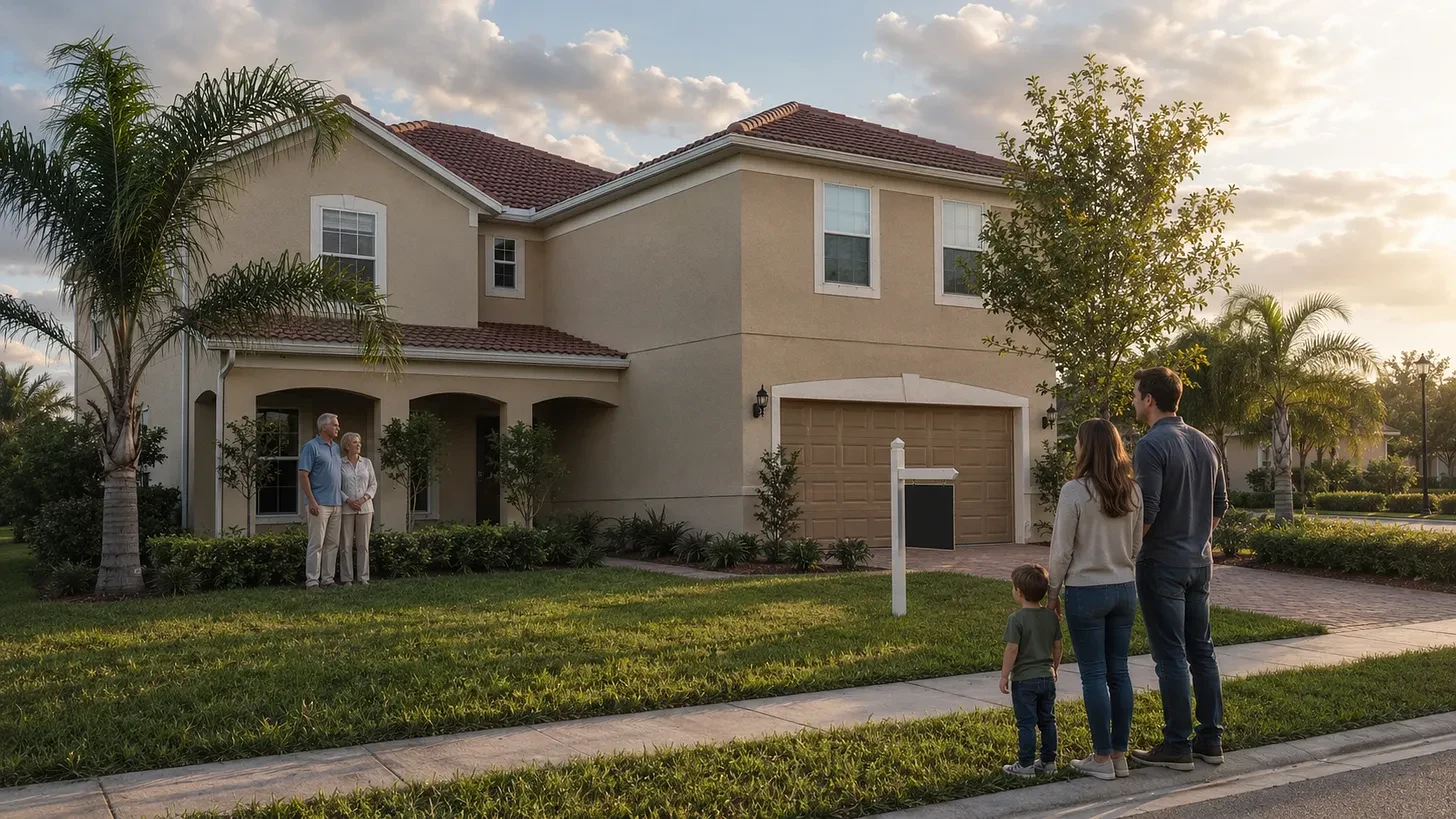
A housing market can be short of homes and still have too many houses for sale.
That sounds like a contradiction. It is not.
The contradiction disappears once we stop treating housing as a single, interchangeable commodity. A house is not simply a unit of shelter. It exists in a particular place, carries a particular monthly cost, reflects a particular development pattern, and fits some households and life stages better than others. A home can physically exist and still fail to match the people who are available to buy it.
Florida may be giving us an early view of what happens when that mismatch begins to surface at scale.
In early July 2026, Florida had more than 215,000 active residential listings—roughly one of every seven homes for sale in the United States. Yet Florida contains only about 7.3 percent of the nation’s total housing stock. According to the Parcl Labs data behind those figures, nearly 45 percent of Florida listings had already received a price cut, and more than 10 percent were being offered below the price their owners had previously paid.
Those figures do not describe a uniform statewide collapse. Florida Realtors subsequently reported year-over-year gains in June sales and median prices at the state level. But statewide averages can conceal the places where a larger structural change is becoming visible.
Punta Gorda offers a more revealing example. More than half of its residents are 65 or older, and more than eight out of ten occupied homes are owner-occupied. Through June 2026, Zillow estimated that the city’s typical home value had declined 8.3 percent from the prior year. Nearly 87 percent of recent sales closed below the asking price.
None of this proves that Florida has entered what researcher Arthur C. Nelson calls the [Great Senior Short-Sale](https://readingroom.law.gsu.edu/jculp/vol4/iss1/28/). But it raises a question that should matter far beyond Florida:
What happens when an aging, owner-heavy housing market begins producing more homes for sale than the next generation can—or wants to—purchase at yesterday’s prices?
What the Great Senior Short-Sale Actually Means
The phrase can be misleading if it is read only as a conventional real-estate term.
Nelson is not simply predicting millions of lender-approved short sales in which a home is sold for less than the remaining mortgage balance. The larger concern is an intergenerational market mismatch. Millions of older Americans have treated home equity as a central part of their retirement strategy. At some point, those homes must be sold, inherited, occupied by someone else, or substantially adapted.
The value seniors expect to recover depends on a successor generation that is both willing and financially able to buy what they are selling.
That assumption deserves far more scrutiny than it has received.
The housing system built during the second half of the twentieth century was calibrated around a particular household: a married couple raising children, purchasing a detached home on a comparatively large lot, and relying on one or more automobiles for nearly every daily need. That household still exists, but it no longer represents the dominant shape of American life.
Households are smaller. People are marrying and having children later. Birth rates have fallen. More adults live alone. The share of older households is rising rapidly. At the same time, younger buyers are reaching homeownership later and facing higher prices, larger down payments, elevated mortgage rates, and significant education, childcare, and transportation costs.
The National Association of Realtors reported that the typical first-time buyer is now 40 years old and that first-time buyers accounted for only 21 percent of recent purchasers—a record low. The typical seller, meanwhile, is 64.
That is not merely an affordability statistic. It describes a weakening handoff between generations.
Why Florida Matters
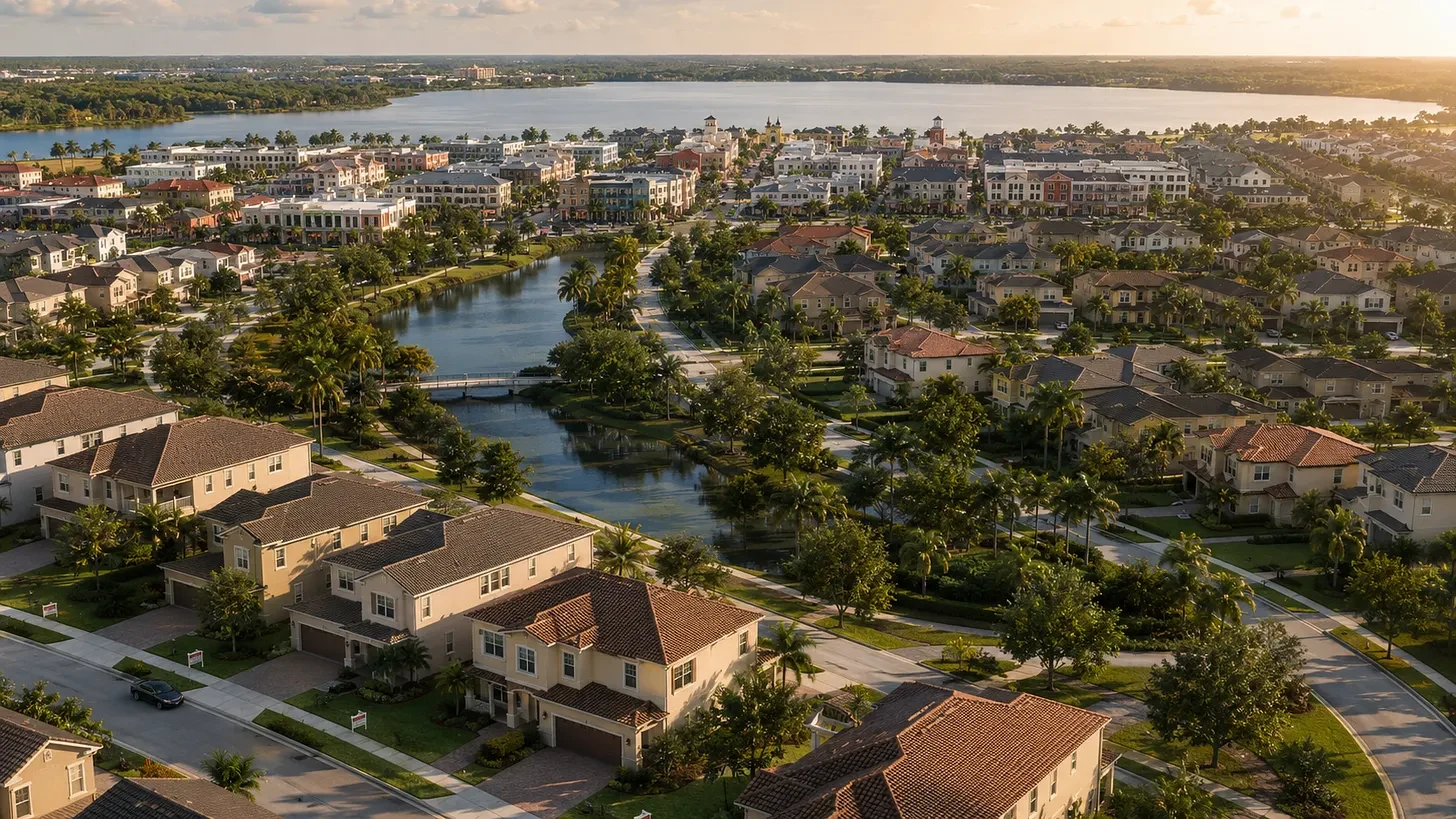
Florida brings several parts of this problem together in one place.
First, it is older than the country as a whole. Approximately 22.8 percent of Florida’s population is 65 or older, compared with 18.9 percent nationally. In places such as Punta Gorda, the senior share is dramatically higher.
Second, Florida has built aggressively. In recent years, only Texas has issued more housing permits. That production made sense while rapid migration and pandemic-era demand appeared capable of absorbing it. But construction pipelines move more slowly than markets. Land is acquired, projects are entitled, infrastructure is extended, and homes continue arriving after the demand assumptions behind them have begun to change.
Third, Florida’s domestic migration has slowed sharply. Net domestic migration fell from more than 310,000 people in 2022 to approximately 22,500 in 2025. Florida continued to grow through international migration and natural change, but the stream of incoming domestic households that helped support rapid housing absorption became far narrower.
Fourth, the purchase price is no longer the whole price. Insurance, association dues, reserve assessments, maintenance, storm exposure, and automobile dependence all shape whether a home is affordable to own. In 2023, Florida had the nation’s highest median property-insurance cost for households with a mortgage. These carrying costs can place pressure on an existing owner to sell while simultaneously discouraging the next buyer from purchasing.
Finally, existing-home sellers must compete with new construction. Builders can reduce prices, buy down mortgage rates, pay closing costs, and deliver homes requiring less immediate maintenance. An older owner selling a conventional house or condominium may not have the same tools. When buyers become scarce, the existing home must compete not only on price, but on condition, insurance exposure, monthly cost, location, and neighborhood form.
This is how a market can reverse quickly. The issue is not simply that Florida built too much. It may have built—and inherited—more of certain housing products than the changing market can absorb at expected prices.
The Problem Is Mismatch, Not Abundance
[The Great Housing Reversal](https://www.amazon.com/Great-Housing-Reversal-American-Dream/dp/B0G1FG4PXN/ref=sr_1_1) begins with a simple observation: America’s housing problem cannot be understood through unit count alone.
Housing has to match household size, income, age, mobility, life stage, and the daily pattern of living. It also has to exist in a place where people can participate in community and meet ordinary needs without carrying an unnecessarily expensive private infrastructure system in the form of multiple automobiles.
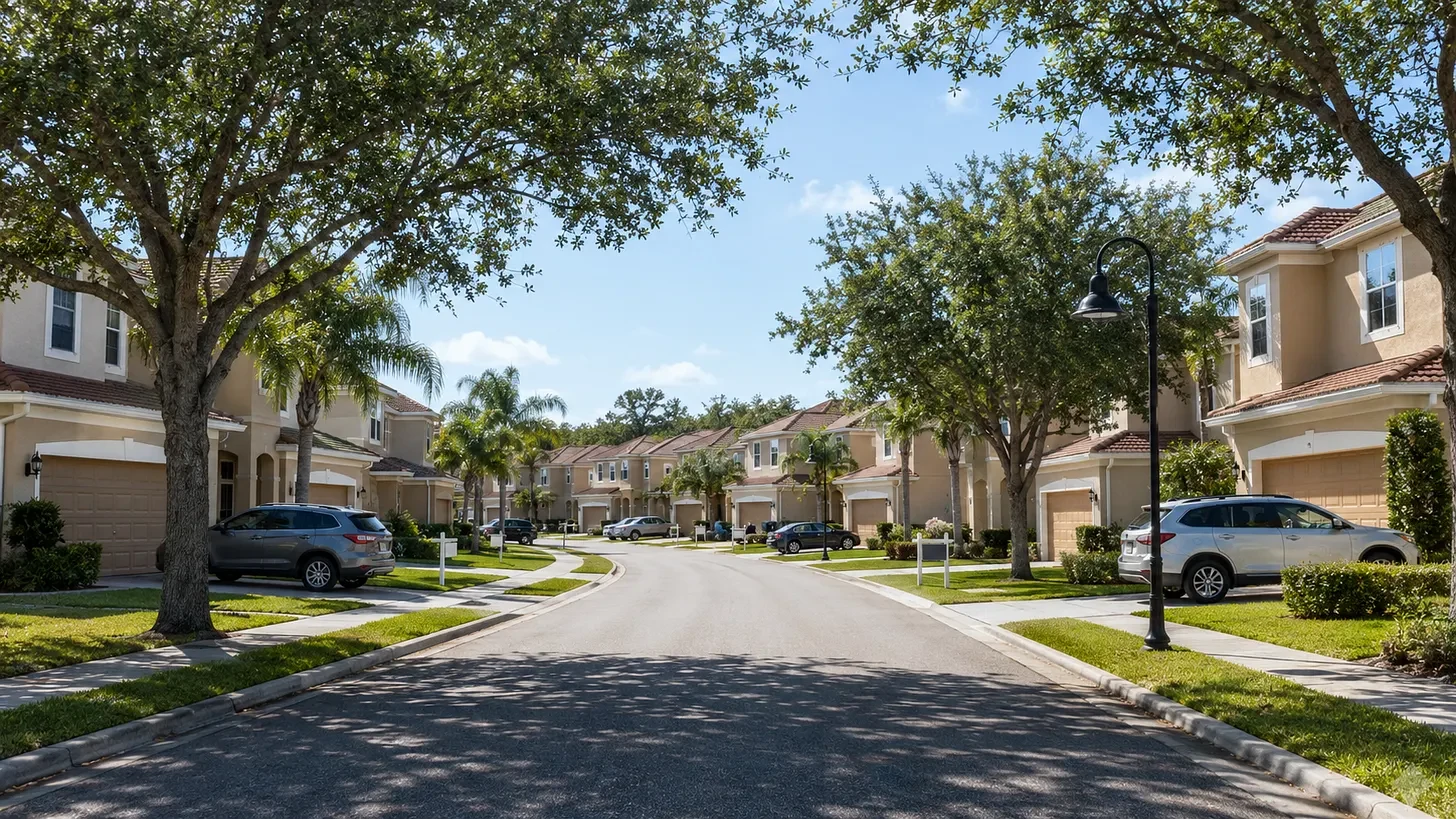
A three- or four-bedroom house on a large suburban lot may remain desirable to a family with children and sufficient income. But it may be too large for an older adult who wants to downsize, too expensive for a younger household trying to enter the market, and too isolated for someone who no longer wishes—or is no longer able—to drive everywhere.
The house is not inherently obsolete. The narrow market assumption beneath it is.
This distinction matters because the United States can simultaneously experience:
a shortage of attainable starter homes;
a shortage of small homes for seniors;
a shortage of accessible homes near daily needs;
a shortage of walkable neighborhoods;
and a localized surplus of larger, costlier, automobile-dependent homes.
Calling all of this a “housing shortage” is technically convenient but practically incomplete. It combines different problems into one number and then encourages us to produce more of whatever the existing system already knows how to deliver.
Florida’s inventory imbalance may therefore be less a story about excess housing than about restricted market bandwidth. Market bandwidth describes the range of households, incomes, and life stages that a neighborhood’s housing can serve. A place with detached houses, cottages, duplexes, townhouses, small apartments, accessory dwellings, and nearby daily needs has broad bandwidth. A place dependent on one house type, one lot pattern, and one mobility system has narrow bandwidth.
Narrow-bandwidth places may perform well while the household they were designed around is growing. They become fragile when demographics, financing, insurance, or consumer preferences change.
The Missing Housing Is Often in the Same Neighborhood
One of the most damaging features of our present system is that it often forces people to leave their community when their housing needs change.
An older couple may want a smaller home but find that the only nearby choices are another large detached house or an apartment disconnected from the neighborhood they know. A widowed homeowner may have more house than she needs but no legal way to create an accessory dwelling, divide the house sensitively, or move into a cottage nearby. A young household may want to purchase in the community but find no attainable entry point between renting an apartment and buying a large single-family home.
The result is not simply housing mismatch. It is broken circulation.
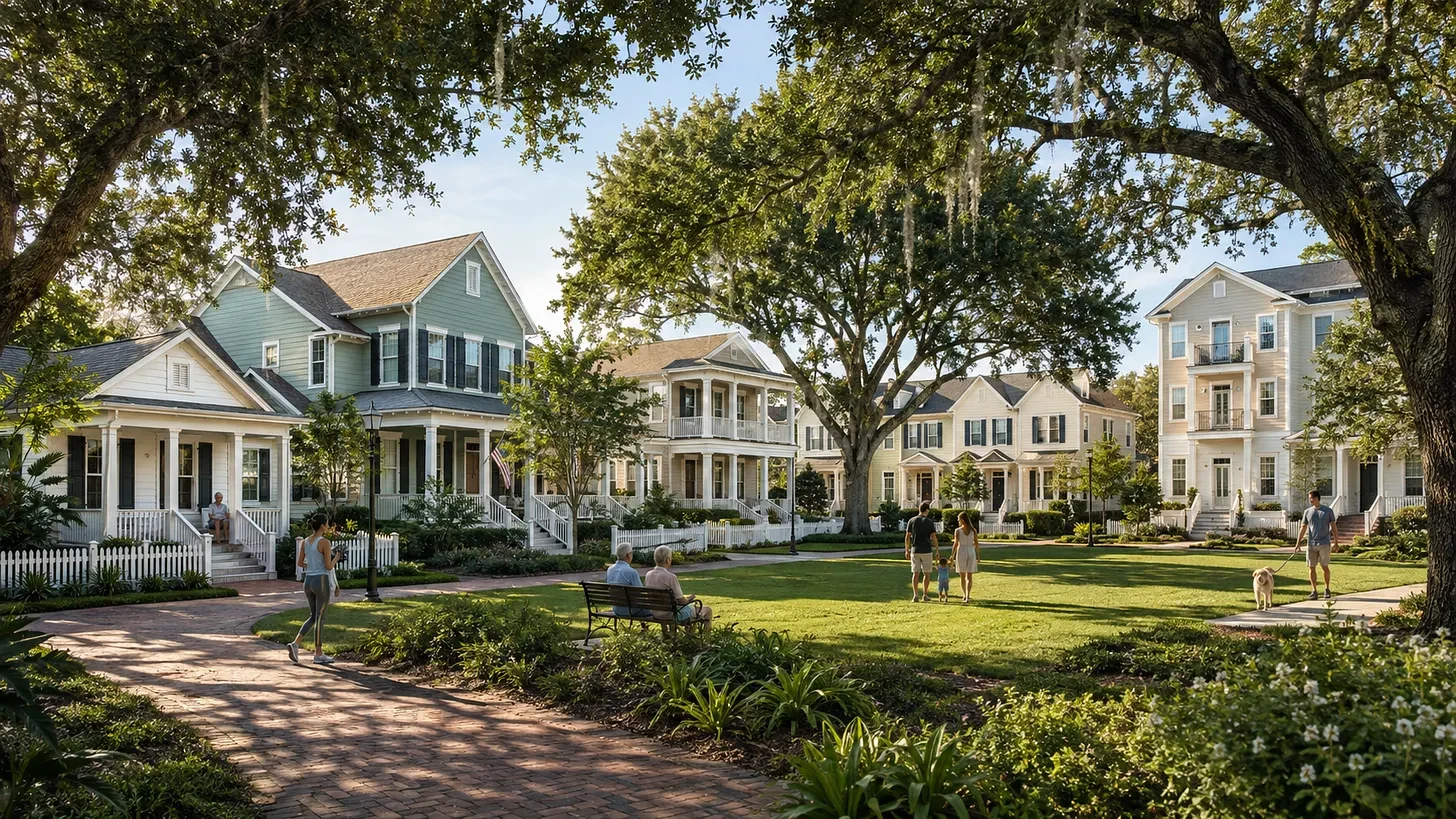
Healthy neighborhoods allow people to move through the stages of life without being expelled from the relationships, routines, and shared ground that make a place feel like home. A young adult should be able to enter. A family should be able to grow. An older resident should be able to simplify. A caregiver should be able to live nearby. A home should be capable of adapting without the neighborhood losing its essential character.
When zoning prevents that succession, it turns demographic change into market fragility.
This is where Florida’s experience connects directly to the larger Great Housing Reversal. The warning is not merely that seniors may receive less for their homes than they expected. It is that decades of land policy, design practice, and code have produced communities with too little capacity to adapt when one generation gives way to another.
Florida Is a Signal, Not Yet Proof
Care is necessary here.
The available listing data do not tell us the age of each seller. They do not distinguish consistently among primary residences, second homes, investor-owned properties, condominiums, manufactured homes, and detached houses. A price reduction is not the same as a financial loss. A home listed below its prior purchase price has not necessarily sold at that price, and it does not tell us whether the owner is underwater.
Florida’s present weakness is also uneven. Southwest Florida and older condominium markets face conditions that differ from those in other parts of the state. Storm recovery, insurance exposure, reserve requirements, pandemic-era investor activity, and unusually high construction levels all complicate the picture. Statewide sales and median prices improved in June 2026, reminding us that a market can contain serious local distress while remaining comparatively stable in the aggregate.
The responsible conclusion is therefore not that the Great Senior Short-Sale has definitively arrived in Florida.
The responsible conclusion is that Florida contains several of the conditions Nelson warned about: a large senior population, high owner occupancy, slowing domestic migration, substantial new construction, rising ownership costs, and a successor generation entering homeownership later and in smaller numbers. Where those conditions overlap, the market deserves close attention.
The Choice Before Us
If Florida is an early warning, the answer is not to stop building.
It is to build and retrofit with greater intelligence.
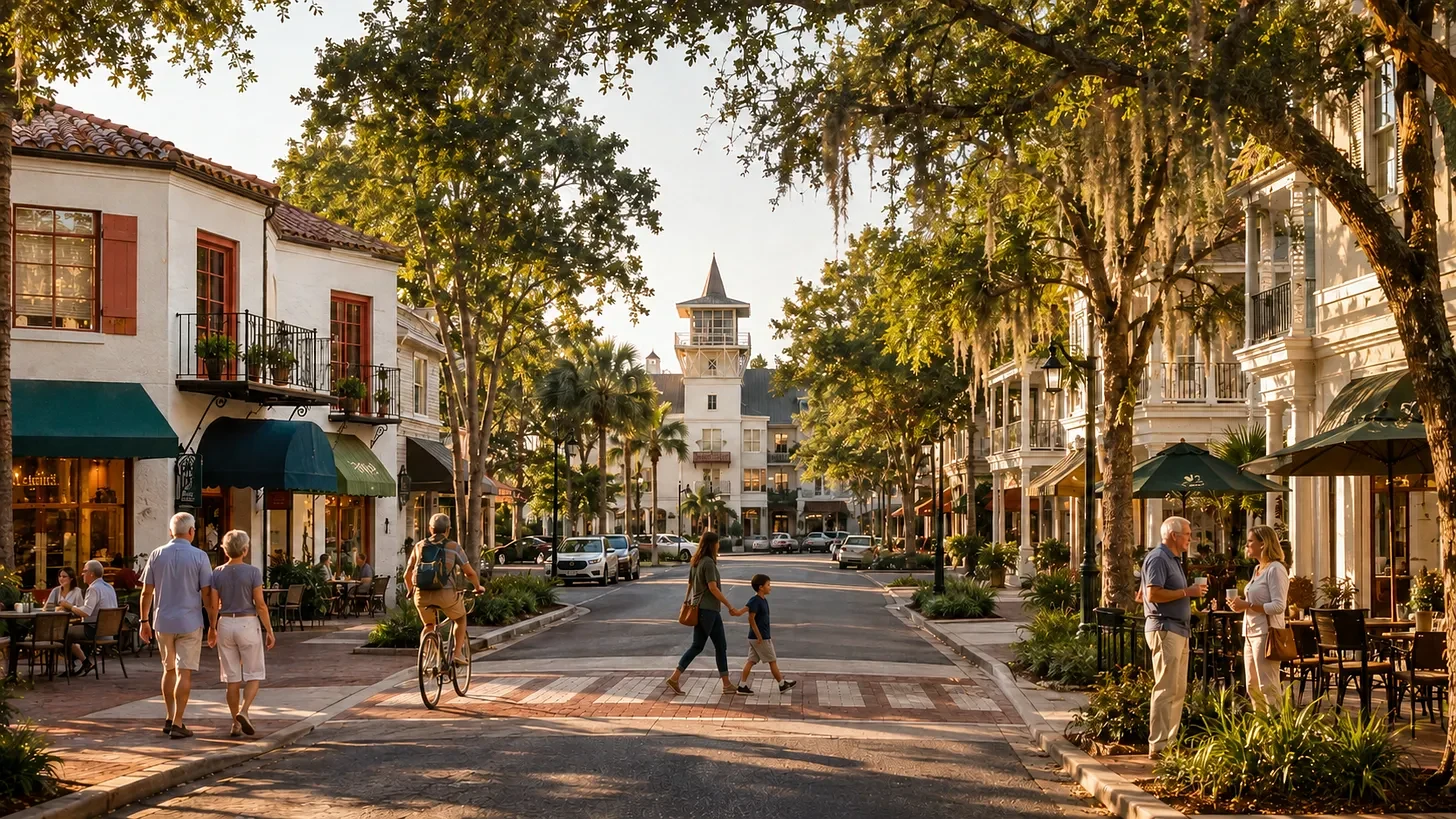
We need to broaden the market bandwidth of existing communities. That means allowing accessory dwellings, cottages, duplexes, small multifamily buildings, courtyard housing, and other forms that can be inserted without erasing neighborhood identity. It means making it easier to divide or adapt oversized homes where the design permits. It means creating complete neighborhoods where smaller homes are connected to daily needs, social life, and the public realm.
It also means examining every community through the combined relationship of land, design, and code.
Land determines whether small and incremental projects are financially possible. Design determines whether new housing reinforces the neighborhood or merely adds units. Code determines whether adaptation is legal at all.
If any one of the three is misaligned, the housing system loses its capacity to respond.
The Great Senior Short-Sale is ultimately not just a warning about prices. It is a warning about stewardship. A society that encouraged one generation to store much of its wealth in a narrow range of housing types also carries a responsibility to ensure that those homes and neighborhoods can remain useful to the generations that follow.
Florida may be showing us the first visible strain in that transfer. We should not wait for a national crisis to learn what the signal means.
The homes are already here. The seniors are already aging. The next generation is already smaller, older when it buys, and more constrained in what it can afford.
What remains within our control is whether our communities are allowed to adapt.